DIY VS. PROFESSIONAL POST-CONSTRUCTION CLEANING
Thinking about cleaning up after construction yourself? Here's what it actually takes, what DIY misses, and when it makes sense to call in a professional crew.
DIY vs. Professional Post-Construction Cleaning: Which Is Right for You?
You just finished a renovation, your contractor packed up and left, and your home is covered in a film of fine white dust. Your first instinct might be to grab a broom, some rags, and a bottle of all-purpose cleaner and tackle it yourself. That instinct makes sense — you have already spent thousands on the renovation, and spending more on cleaning feels like an unnecessary add-on.
But post-construction dust is not regular household dust. It behaves differently, it hides in places you would never think to check, and it requires equipment that most homeowners do not own. Before you decide to DIY your post-construction cleanup, it is worth understanding exactly what is involved, what equipment you would need, how long it actually takes, and what the consequences are if construction dust is not fully removed — especially in Arizona's desert climate where HVAC systems run nearly year-round and fine dust recirculates for months.
This guide gives you an honest comparison so you can make the right call for your project, your budget, and your home — whether that project is in Scottsdale, Paradise Valley, Gilbert, Surprise, or anywhere else across the Phoenix metro.
What DIY Requires
HEPA vacuum ($500-$900 to buy or $50-$80/day to rent), microfiber cloths, mop, extension poles, razor blades, and specialty cleaning solutions
8 to 20+ hours of hands-on labor for a single-family home depending on size and scope of the renovation
Knowledge of which products are safe for each surface — wrong cleaner on natural stone, hardwood, or custom finishes causes permanent damage
What Professionals Bring
Commercial-grade HEPA filtration vacuums, microfiber systems, air scrubbers, extension poles, and surface-specific chemical treatments
Trained crews that complete the same job in a fraction of the time with a systematic room-by-room process
Experience identifying and cleaning areas most homeowners miss — HVAC vents, cabinet interiors, window tracks, light fixture housings, and door hinges
What DIY Misses
Fine drywall dust inside HVAC ductwork — a standard vacuum pushes it deeper into the system where it recirculates for months
Adhesive residue on windows and fixtures that requires specific solvents and techniques to remove without scratching
Construction dust behind appliances, inside electrical outlets, on top of ceiling fan blades, and inside closet shelving and drawer tracks
The Real Cost Comparison
DIY equipment rental or purchase plus a full weekend or more of labor versus a professional final clean starting at $0.30/sq ft
HVAC repairs from dust damage average $200 to $500 — more than many professional cleaning quotes for the same home
One incorrect cleaning product on natural stone, hardwood, or custom finishes can cause hundreds or thousands in repair costs
What DIY Requires
HEPA vacuum ($500-$900 to buy or $50-$80/day to rent), microfiber cloths, mop, extension poles, razor blades, and specialty cleaning solutions
8 to 20+ hours of hands-on labor for a single-family home depending on size and scope of the renovation
Knowledge of which products are safe for each surface — wrong cleaner on natural stone, hardwood, or custom finishes causes permanent damage
What Professionals Bring
Commercial-grade HEPA filtration vacuums, microfiber systems, air scrubbers, extension poles, and surface-specific chemical treatments
Trained crews that complete the same job in a fraction of the time with a systematic room-by-room process
Experience identifying and cleaning areas most homeowners miss — HVAC vents, cabinet interiors, window tracks, light fixture housings, and door hinges
What DIY Misses
Fine drywall dust inside HVAC ductwork — a standard vacuum pushes it deeper into the system where it recirculates for months
Adhesive residue on windows and fixtures that requires specific solvents and techniques to remove without scratching
Construction dust behind appliances, inside electrical outlets, on top of ceiling fan blades, and inside closet shelving and drawer tracks
The Real Cost Comparison
DIY equipment rental or purchase plus a full weekend or more of labor versus a professional final clean starting at $0.30/sq ft
HVAC repairs from dust damage average $200 to $500 — more than many professional cleaning quotes for the same home
One incorrect cleaning product on natural stone, hardwood, or custom finishes can cause hundreds or thousands in repair costs
PHOENIX METRO CITIES WE SERVE
Phoenix · Scottsdale · Paradise Valley · Cave Creek · Carefree · Fountain Hills
Mesa · Tempe · Chandler · Gilbert · Queen Creek · San Tan Valley · Apache Junction
Glendale · Peoria · Surprise · Sun City · Sun City West · Youngtown · El Mirage
Goodyear · Avondale · Buckeye · Litchfield Park · Tolleson · Estrella · Verrado
Anthem · New River · Desert Hills · Laveen · Ahwatukee · Gold Canyon · Maricopa · Casa Grande
PHOENIX METRO CITIES WE SERVE
Phoenix · Scottsdale · Paradise Valley · Cave Creek · Carefree · Fountain Hills
Mesa · Tempe · Chandler · Gilbert · Queen Creek · San Tan Valley · Apache Junction
Glendale · Peoria · Surprise · Sun City · Sun City West · Youngtown · El Mirage
Goodyear · Avondale · Buckeye · Litchfield Park · Tolleson · Estrella · Verrado
Anthem · New River · Desert Hills · Laveen · Ahwatukee · Gold Canyon · Maricopa · Casa Grande
When You Are Ready to Call In the Pros
When You Are Ready to Call In the Pros
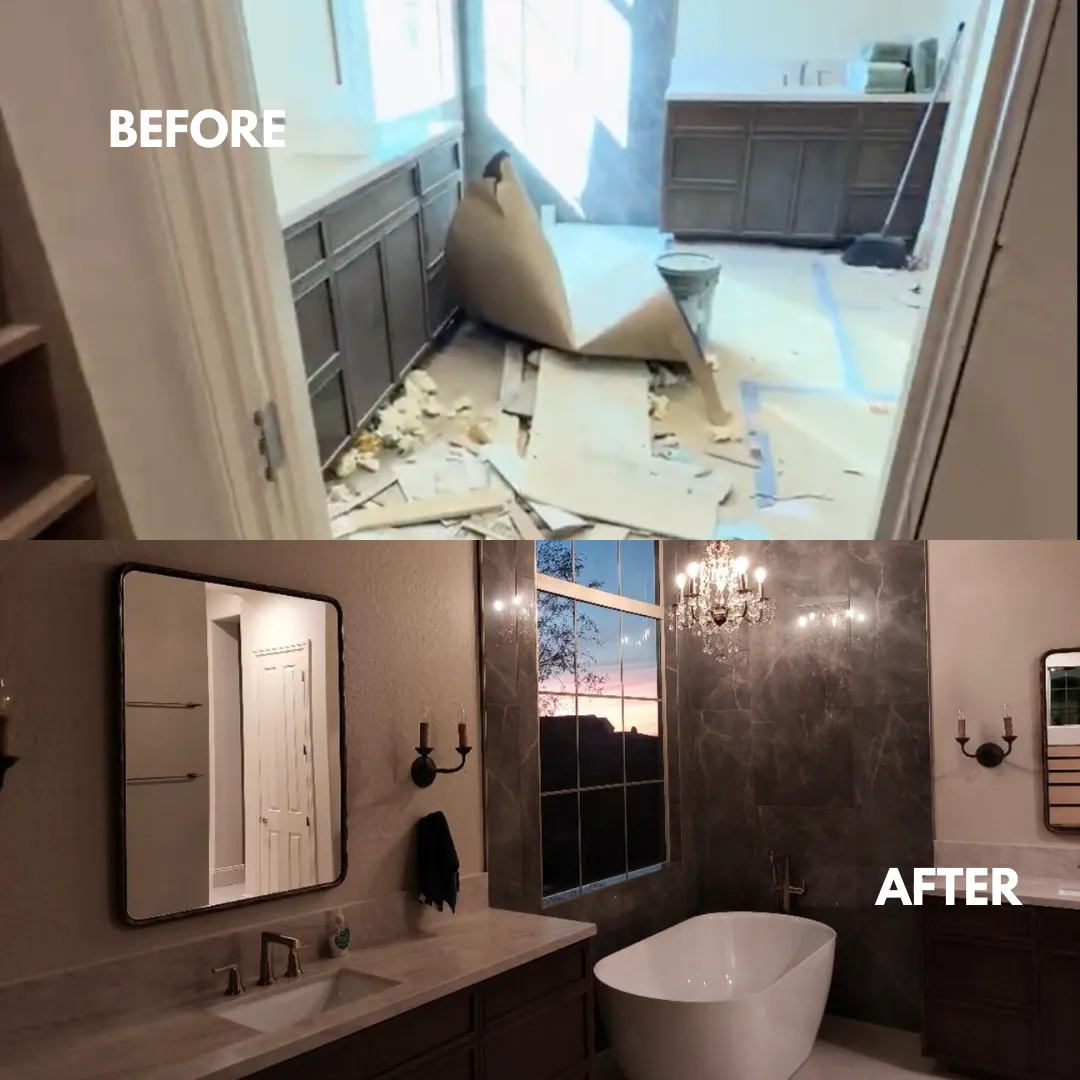
Construction Cleaning Is All We Do
Licensed + Insured Protection
One Call — All Services Included
Reliable Close-Out Support
Construction Cleaning Is All We Do
Licensed + Insured Protection
One Call — All Services Included
We Hit Your Deadline. Every Time.
What Post-Construction Dust Actually Is (And Why It Matters)
Before comparing DIY to professional cleaning, it helps to understand what you are actually dealing with. Post-construction dust is not the same thing as the dust that accumulates on your furniture from everyday living. Construction dust is a mix of multiple materials — each with different particle sizes, chemical properties, and health implications — and each requiring a different approach to remove properly.
Drywall dust is the most common culprit. Drywall sanding produces calcium sulfate particles that are extremely fine — small enough to pass through standard vacuum filters and become airborne again the moment you think you have cleaned them up. These particles settle on every horizontal and vertical surface in the home, and they migrate through HVAC ductwork into rooms that were not even part of the construction zone. In Arizona's dry climate, drywall dust stays airborne longer and travels farther than in more humid environments.
Paint overspray creates a thin film on windows, glass fixtures, and smooth surfaces that bonds at a molecular level and cannot be removed with standard glass cleaner. Grout haze from new tile work leaves a chalky residue on tile and surrounding surfaces. Adhesive residue from protective films, stickers, and labels on new windows, fixtures, and appliances requires specific solvents to remove without scratching the underlying surface. Sawdust from framing, trim work, and cabinetry installation embeds in carpet fibers and textured surfaces. Concrete and mortar dust from foundation work, flatwork, or masonry creates an alkaline residue that can etch certain surface types if not cleaned properly.
A homeowner who grabs a regular household vacuum and a roll of paper towels is not equipped to deal with any of this effectively. That does not mean DIY is never appropriate — but it means you need to understand what you are up against before you decide.
The Equipment You Need for DIY Post-Construction Cleaning
If you are going to attempt post-construction cleaning yourself, you need the right equipment. Using the wrong tools will not just produce poor results — it can actually make the problem worse by redistributing fine dust into the air and into your HVAC system.
The most critical piece of equipment is a vacuum with true HEPA filtration. A standard household vacuum — including most upright and stick vacuums — does not have a sealed HEPA system. It may say "HEPA filter" on the box, but unless the entire vacuum is sealed so that all air passes through the HEPA filter before exiting, fine construction dust will blow straight through the exhaust and back into the room. A sealed HEPA vacuum costs $300 to $600 to purchase or $50 to $80 per day to rent from an equipment rental company. This is non-negotiable — attempting post-construction cleaning without HEPA filtration is counterproductive.
Beyond the vacuum, you will need a large supply of microfiber cloths — not rags, not paper towels, not old t-shirts. Microfiber is the only material that actually grabs and holds fine dust rather than pushing it around. Plan on at least 20 to 30 microfiber cloths for a single-family home because they need to be swapped out frequently as they load up with dust. You will need a mop with a microfiber head, extension poles for reaching ceilings, ceiling fans, and high trim, a squeegee and razor blade holder for windows, a step ladder, buckets, and multiple spray bottles.
For cleaning products, you will need a general-purpose all-surface cleaner, a glass cleaner, a specialty adhesive remover like Goo Gone or a citrus-based solvent, a grout haze remover if your project involved tile work, and a floor cleaner appropriate for your specific flooring material. Using the wrong product on the wrong surface can cause permanent damage — an abrasive cleaner on natural stone will etch it, an ammonia-based cleaner on hardwood will strip the finish, and a razor blade at the wrong angle on tempered glass will scratch it.
Add it all up and the equipment cost for a proper DIY post-construction cleaning is $150 to $300 in supplies and consumables plus $50 to $80 per day in vacuum rental. That total often lands within striking distance of what a professional crew would charge — especially for smaller projects like a kitchen or bathroom renovation.
How Long DIY Post-Construction Cleaning Actually Takes
This is where most homeowners dramatically underestimate the DIY approach. Post-construction cleaning is slow, tedious work — especially if you have never done it before and are figuring out the process as you go.
A single-family home of 2,000 square feet with a moderate renovation — say a kitchen remodel and a bathroom remodel — will take one person 12 to 20 hours of hands-on cleaning time. That is two to three full days of work, assuming you are working steadily without long breaks. A whole-home gut renovation with new drywall, paint, and flooring throughout will take 20 to 40 or more hours depending on the size of the home and the extent of the mess.
Compare that to a professional crew. Clean Buddies typically completes a 2,000-square-foot home final clean in one day with a trained crew. The same project that takes a homeowner an entire weekend or more is done by the time you get home from work. A professional crew is faster because they have done it hundreds of times, they work systematically from top to bottom and room to room, they have all the right equipment staged and ready, and they know exactly where construction dust hides so they do not waste time on areas that do not need attention.
Time has a real cost. A weekend or more spent on hands-and-knees scrubbing is a weekend you could spend setting up your newly renovated kitchen, unpacking, or simply enjoying your home. For homeowners across the Phoenix metro — from busy families in Gilbert and Chandler to professionals in Scottsdale and Tempe — the time savings alone often justifies the cost of hiring a crew.
What DIY Cleaning Misses
Even with the right equipment and a solid effort, DIY post-construction cleaning consistently misses areas that a trained professional crew addresses as standard practice. These missed areas are not cosmetic niceties — they are functional problems that create issues for weeks or months after the renovation is done.
The biggest miss is HVAC ductwork. During construction, fine dust is pulled into the return air vents and deposited throughout the duct system. When you turn on the air conditioning or heating — which in Phoenix means nearly every day of the year — that dust is blown back into every room in the house. A homeowner cleaning the vent covers addresses the visible dust, but the dust inside the ducts remains untouched. Professional post-construction cleaning includes vacuuming all vents and returns, and Clean Buddies offers full air duct cleaning as an add-on service for projects with heavy dust generation.
Inside cabinets is another commonly missed area. New cabinets arrive from the factory with sawdust and packaging debris inside, and construction dust settles into every shelf and drawer during the building process. Most homeowners open the cabinet doors and wipe the shelves, but miss the drawer tracks, the tops of interior partitions, the undersides of adjustable shelf pins, and the inside corners where dust accumulates. On custom cabinetry in luxury homes across Scottsdale, Paradise Valley, and Cave Creek — where cabinet packages can represent a five- or six-figure investment — thorough interior cleaning is not optional.
Window tracks and frames are consistently missed by DIY cleaners. Construction dust, drywall compound, and paint overspray accumulate in the tracks that windows and sliding doors ride on. If not cleaned, this debris causes windows to stick, slide poorly, and wear out their hardware prematurely. Professional cleaning includes pulling screens, vacuuming tracks, wiping frames, and removing all adhesive residue — a process that takes significant time on homes with large window packages.
Other commonly missed areas include the tops of door frames and window headers, the inside of light fixture housings, the backsides of toilet tanks, the underside of countertop overhangs, inside electrical outlet and switch plate cavities, on top of ceiling fan blades, behind refrigerators and other appliances, and the interior of closet shelving systems. A professional crew works through a checklist that includes all of these areas. A homeowner working without a system inevitably skips several.
The Health Risk Factor in Arizona
Construction dust is not just a cleaning nuisance — it is a health concern. Drywall dust contains crystalline silica, which is a known respiratory irritant. Paint dust may contain volatile organic compounds. Concrete and mortar dust is highly alkaline. Sawdust from treated lumber may contain chemical preservatives. Breathing these particles during a lengthy DIY cleaning session without proper respiratory protection is a genuine health risk.
Professional cleaning crews wear N95 respirators and use HEPA filtration equipment that captures airborne particles rather than redistributing them. A homeowner attempting DIY construction cleanup without respiratory protection is inhaling the very dust they are trying to remove — and in Arizona, where many homes are sealed tight with the windows closed and the AC running, that dust has nowhere to go except through your lungs and back into the HVAC system.
Arizona's desert climate compounds this issue. The ambient outdoor air in the Phoenix metro already carries elevated levels of fine particulate matter from desert dust, especially during monsoon season. Adding construction dust on top of Arizona's baseline air quality creates an indoor environment that can aggravate allergies, trigger asthma, and cause respiratory irritation — particularly for children, elderly family members, and anyone with pre-existing respiratory conditions. Professional HEPA-filtration cleaning is not a luxury in this climate. It is a health measure.
When DIY Makes Sense
To be fair, there are situations where DIY post-construction cleaning is a reasonable choice. The key factors are the size and scope of the project, the type of dust generated, and the surfaces involved.
DIY may be appropriate if the project was very small — for example, replacing a single window, installing a new light fixture, or patching and painting a small section of drywall. If the construction generated minimal dust, did not involve drywall sanding or tiling, and the affected area is limited to one room or one wall, a homeowner with a HEPA vacuum and microfiber cloths can handle the cleanup effectively.
DIY is also reasonable if the project did not involve any specialty surfaces. If your home has standard drywall, standard tile, laminate countertops, and vinyl or carpet flooring, the risk of damage from incorrect cleaning products is low. The stakes change significantly in homes with natural stone countertops, hardwood flooring, custom painted cabinets, or designer fixtures — one wrong product choice on these materials can cause costly damage.
If your project involved drywall sanding, tiling with grout, painting more than one room, or any work that generated dust over multiple weeks — professional cleaning is strongly recommended regardless of the size of the home. The volume and type of dust generated by these activities is beyond what DIY can address thoroughly.
When to Hire a Professional
Professional post-construction cleaning is the right choice for most renovation and new construction projects across the Phoenix metro. Specifically, hire a professional if any of the following apply to your project.
The project involved drywall installation or sanding. Drywall dust is the single hardest construction contaminant to fully remove and the most damaging to HVAC systems if left untreated. Any project that involved hanging new drywall, patching drywall, or sanding drywall joints should be professionally cleaned with HEPA filtration.
The project affected more than one room. Dust migration in Arizona homes is aggressive because of sealed building envelopes and continuously running HVAC systems. A kitchen renovation creates dust in the kitchen, but it also deposits dust in every room connected by the ductwork. Professional cleaning addresses the full extent of the dust migration.
The home has premium or delicate surfaces. Custom homes in Scottsdale, Paradise Valley, Cave Creek, Carefree, Fountain Hills, and the Arcadia and Biltmore areas of Phoenix frequently feature natural stone, imported tile, custom hardwood, hand-painted finishes, and designer fixtures that require material-specific cleaning expertise. The cost of replacing or refinishing a damaged premium surface far exceeds the cost of professional cleaning.
You are on a tight timeline. If you have a move-in date, a buyer walkthrough, or a certificate of occupancy inspection approaching, professional cleaning saves days of time compared to DIY. Clean Buddies completes most single-family home final cleans in one day.
You want it done right the first time. Professional post-construction cleaning means the job is done completely, systematically, and with the right equipment — no weekends spent scrubbing, no dust reappearing two days later, no HVAC issues three months down the road. For most homeowners across the Valley, the peace of mind alone is worth the investment.
The Real Cost Comparison
Here is how the numbers actually break down for a typical 2,000-square-foot home after a moderate renovation in the Phoenix metro.
The DIY route costs roughly $150 to $300 in supplies and consumables — microfiber cloths, cleaning products, adhesive remover, mop, buckets, and miscellaneous items. Add $50 to $160 for a two-day HEPA vacuum rental. Add 15 to 25 hours of your personal labor. The total cash outlay is $200 to $460 plus a full weekend or more of your time. If you value your time at even $25 per hour, the true cost of DIY is $575 to $1,085.
A professional final clean for the same 2,000-square-foot home with Clean Buddies typically costs $600 to $1,500 depending on the level of detail and scope. The job is done in one day by a trained crew with commercial-grade equipment. Every surface is addressed, every vent is vacuumed, every window is cleaned, and the space is move-in ready when the crew leaves.
Factor in the risk costs of DIY — potential HVAC repair from dust damage ($200 to $500), potential surface damage from incorrect products ($200 to $2,000+), and the near-certainty that areas will be missed requiring additional cleaning later — and the professional option is often the same price or less than a thorough DIY attempt when all costs are honestly accounted for.
How Clean Buddies Handles It Differently
Clean Buddies is not a general cleaning company that added post-construction work as an upsell. Construction cleaning is the only thing we do — every day, across the entire Phoenix metro. Our crews are trained specifically for construction environments, our equipment is commercial-grade HEPA filtration designed for fine construction particulates, and our process is built from hundreds of completed projects ranging from single-bathroom renovations in Tempe to 240-unit apartment communities in Buckeye.
Every Clean Buddies final clean includes all surfaces, all windows inside and out, all HVAC vents, and all the hidden areas that DIY consistently misses — cabinet interiors, window tracks, light fixtures, door hardware, appliance interiors, and closet systems. Pressure washing and air duct cleaning are available as add-ons for projects that need them.
We serve homeowners, builders, and general contractors across every city in the Phoenix metropolitan area — from luxury custom homes in Paradise Valley, North Scottsdale, Cave Creek, and Carefree to production builds in Surprise, Goodyear, Buckeye, Gilbert, Queen Creek, and San Tan Valley. Free on-site walkthroughs and detailed written estimates are provided for every project. Call or text (480) 908-9684 or submit a request through the free quote form on our website.
Frequently Asked Questions
Can I use a regular vacuum for post-construction cleaning?
No. A standard household vacuum does not have a sealed HEPA filtration system, which means fine construction dust — especially drywall dust — passes through the filter and is blown back into the air through the vacuum exhaust. This redistributes the dust rather than removing it and pushes particles deeper into your HVAC system. A sealed HEPA vacuum is required for effective post-construction dust removal.
How much money would I save by doing it myself?
In most cases, less than you think. After factoring in HEPA vacuum rental, supplies, and the value of your time, DIY costs $575 to $1,085 or more for a 2,000-square-foot home. A professional final clean for the same home typically costs $600 to $1,500. When you add the risk of HVAC damage and potential surface damage from incorrect cleaning methods, professional cleaning frequently costs the same or less than a thorough DIY attempt.
What if I already tried to clean it myself and it still looks dusty?
This is extremely common. Drywall dust is so fine that it reappears on surfaces within hours of cleaning if it was not removed with HEPA filtration — it settles out of the air and out of the HVAC system and recoats everything. If you attempted DIY cleaning and the dust keeps coming back, call Clean Buddies for a professional cleaning with HEPA equipment. We regularly handle jobs where homeowners attempted DIY first and need professional correction.
Is construction dust actually dangerous?
Yes. Drywall dust contains crystalline silica, which is a known respiratory irritant. Paint dust may contain volatile organic compounds. Concrete dust is highly alkaline. Prolonged exposure without respiratory protection — which is what happens during a multi-day DIY cleaning session — can cause respiratory irritation, aggravate asthma, and create ongoing air quality problems in the home. In Arizona, where HVAC systems run constantly and recirculate indoor air, unresolved construction dust is an ongoing health concern.
My renovation was small — do I still need a professional?
It depends on what work was done. If the project involved drywall sanding, tiling with grout, or painting more than one room, professional cleaning is recommended regardless of the size of the project. If the project was very minor — a single fixture replacement or a small patch and paint — DIY with a HEPA vacuum and microfiber cloths is likely sufficient. When in doubt, call Clean Buddies for a free walkthrough and we will tell you honestly whether you need professional cleaning or not.
Do you serve my area?
Clean Buddies serves the entire Phoenix metropolitan area — over 45 cities and communities including Phoenix, Scottsdale, Paradise Valley, Cave Creek, Carefree, Fountain Hills, Mesa, Tempe, Chandler, Gilbert, Queen Creek, San Tan Valley, Glendale, Peoria, Surprise, Goodyear, Avondale, Buckeye, and all surrounding communities. Call or text (480) 908-9684 for a free estimate anywhere in the Valley.
Your Construction Crew’s Cleaning Crew.
QUICK LINKS
AREAS WE SERVICE


Copyright 2026. Clean Buddies Construction Cleaning. All Rights Reserved.
Your Construction Crew’s Cleaning Crew.
QUICK LINKS
AREAS WE SERVICE
Copyright 2026. Clean Buddies Construction Cleaning. All Rights Reserved. Built by Aidan Taylor Marketing.